
Why Puzzle & Pattern Games Click for Autistic Minds (and 9 Free Tools to Try Today)
TL;DR
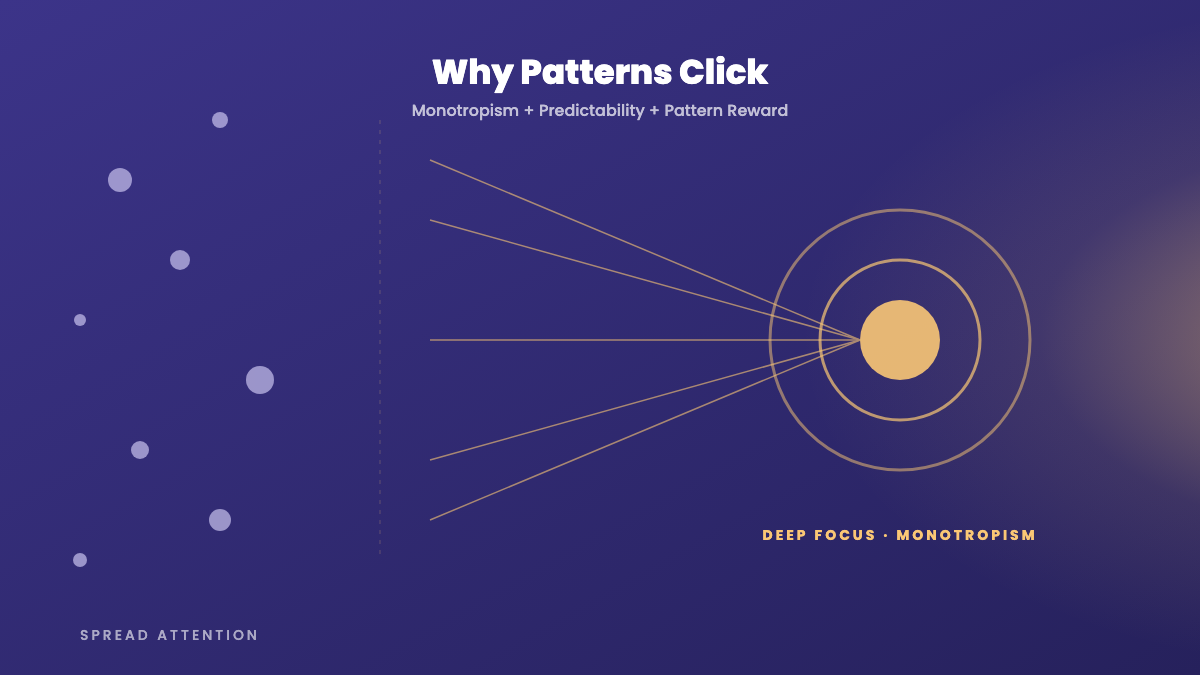
- Many autistic people gravitate toward puzzles because they offer predictability, clear rules, and a satisfying loop of pattern recognition — qualities that align well with how autistic attention tends to work.
- Puzzles can support focus, sensory regulation, and the deep, joyful immersion of a special interest — but they are not therapy, and they are not for every autistic person every day.
- Below: a quick tour of what’s going on in the brain, nine free puzzle and pattern tools to try, plus printable PDFs for classrooms and home.
What’s actually happening in the autistic brain when puzzles click
Pick up a sudoku, a nonogram, or a word search and watch what happens: the room narrows, the chatter quiets, and the next move starts to feel almost magnetic. For a lot of autistic people, that pull is not a quirk — it’s how their attention is built.
The framework that explains this most usefully is monotropism, developed by autistic researchers Dinah Murray, Wenn Lawson, and Mike Lesser. Monotropism describes a style of attention that funnels deeply into a single interest or task rather than spreading thinly across many. Puzzles are almost purpose-built for monotropic minds: one problem, finite pieces, a clear edge between “solved” and “not yet.” There is nothing to track socially, no shifting subtext, no unspoken rules — just the pattern in front of you.
A second piece is predictability. Research on autistic cognition, including work by Rebecca Lawson and colleagues on prediction and uncertainty, suggests autistic people often experience an unpredictable world as more cognitively expensive than non-autistic people do. Puzzles flip that on its head. The rules of sudoku don’t change. A maze always has a solution. A nonogram clue means exactly what it says. That reliability is genuinely regulating, not just preferred.
Then there’s the sensory side. A quiet puzzle session — paper or screen, headphones on, lamp dimmed — is a sensory environment the player controls. For an autistic nervous system that may have spent the whole day filtering fluorescent hum, perfume, and small talk, choosing your own sensory input is a form of rest. Researchers like Sue Fletcher-Watson have noted that autistic-led activity (rather than adult-directed performance) is where regulation tends to actually happen.
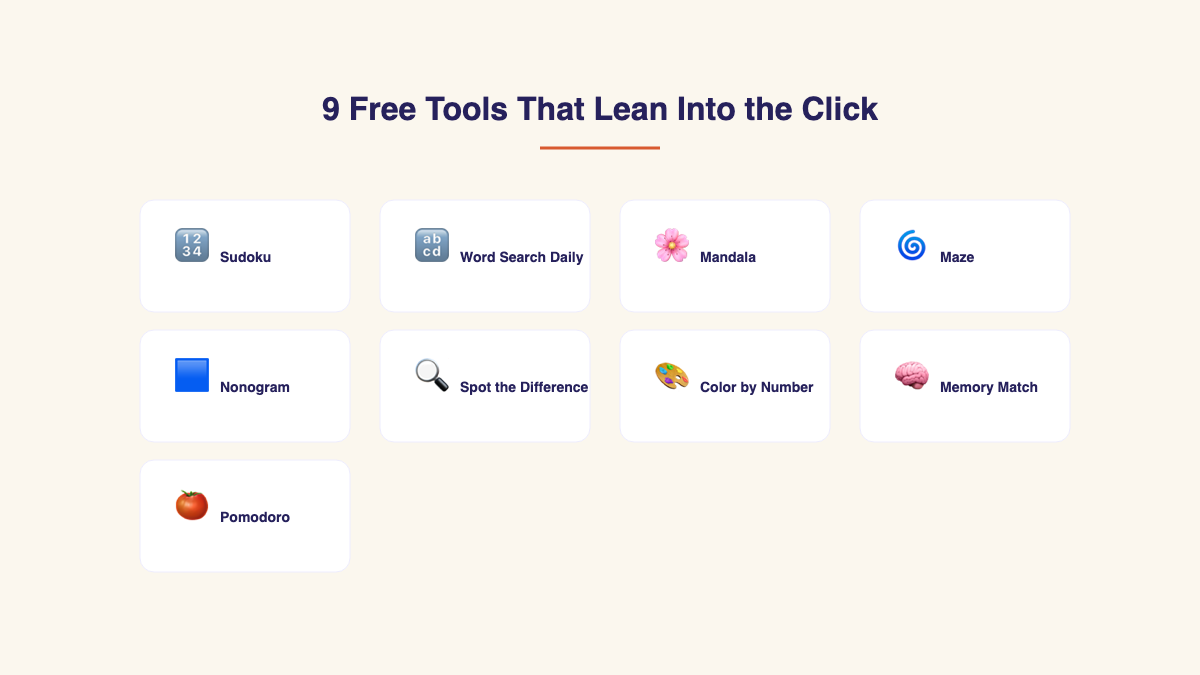
Finally, the pattern reward. Spotting that a column must contain a 7, or that two halves of a word search grid mirror each other, lights up exactly the kind of detail-focused processing that autistic cognition often does well. Temple Grandin has written for decades about the strength of visual, pattern-based thinking; Devon Price, in Unmasked, describes the relief of activities where you don’t have to perform neurotypicality. Puzzles are one of those activities.
9 free puzzle and pattern tools to try
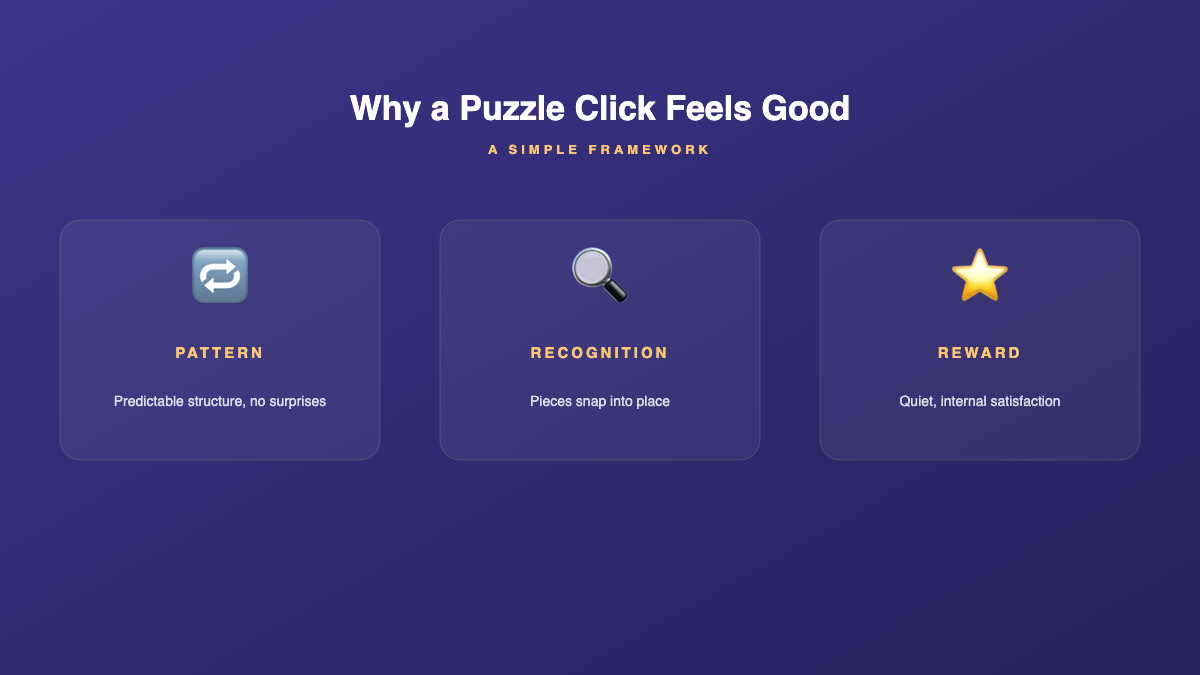
Every tool below runs in a browser, costs nothing, and works on phones, tablets, and laptops. None of them require accounts.
1. Sudoku
The classic logic grid: nine rows, nine columns, no guessing required if you stick to the rules. Sudoku is a near-perfect monotropic activity — one problem, total focus, clean finish. Difficulty levels mean you can choose a session that’s regulating rather than frustrating. Play Sudoku.
2. Word Search of the Day
A daily grid with a fresh theme. Word searches are gentle on working memory, easy to pause, and great for visual scanning. Many autistic players describe them as a kind of “brain hum” — engaged but not demanding. Try today’s word search.
3. Mandala Coloring
Generate a symmetrical mandala and color it however you like. Repetitive, predictable, and quietly meditative — useful for downshifting after a sensory-heavy day. No “right” colors, no time pressure. Open the mandala generator.
4. Maze Generator
Make a maze in seconds at the size and difficulty you want. Mazes scratch the same itch as sudoku — a closed system with a guaranteed solution — and they’re a low-language option for kids who are tired of words. Generate a maze.
5. Nonogram
Also called Picross or griddlers: solve numeric clues to reveal a hidden picture. Nonograms are deeply satisfying for pattern-focused brains because logic and image emerge together. Expect to lose track of time in the best way. Play a nonogram.
6. Spot the Difference
Two near-identical images, a handful of tiny changes. This one rewards the detail-first perception that many autistic people describe as automatic rather than effortful. Great for short breaks between heavier tasks. Spot the difference.
7. Color by Number
Numbered cells, a color key, and a picture that resolves as you fill it in. Color-by-number is a structured, low-decision creative activity — calming for kids who freeze when handed a blank page. Open color by number.
8. Memory Match
Flip cards, find pairs. Memory match is short, finite, and easy to scale up or down — a good fit for a quick regulation break or a shared game with a sibling or student. Play memory match.
9. Pomodoro Timer (paired with a special interest)
Not a puzzle in the usual sense, but a powerful pairing: set a 25-minute block, dive into your special interest (trains, taxonomies, fan-edits, the lore of a single video game — whatever it is), and let the timer hold the structure. Autistic adults often find this combination unlocks hours of focused, joyful work. Open the Pomodoro timer.
A quick aside on the name: our site is called Not Just a Puzzle, but the “puzzle” in our name is about puzzle books — sudoku, word searches, logic grids, coloring. We don’t use the puzzle-piece symbol for autism, and we don’t consider autistic people a puzzle to be solved. The name is about the books on our shelf, not about people.
When puzzles aren’t the answer
Puzzles are a tool, not a treatment. A few honest caveats:
- Burnout is real. If an autistic person has been masking, performing, or sensory-overloaded all day, even a “fun” puzzle can feel like another demand. Lying in the dark is also a valid choice.
- Don’t weaponize them. A puzzle used as a reward for “good behavior” — particularly forced eye contact, suppressed stims, or compliance — stops being play and becomes a transaction. Let puzzles be optional and self-chosen.
- Watch the loop, not just the activity. Deep focus is wonderful; missed meals, ignored bathroom needs, and a meltdown two hours later are not. A gentle external timer (a parent, a Pomodoro, a posted schedule) protects the joy.
- Different brains, different preferences. Some autistic people love sudoku and hate jigsaws. Some love jigsaws and find sudoku stressful. Follow the person, not the stereotype.
Special interests as a strength, not a problem
One of the most damaging older clinical habits was treating autistic special interests as “restricted” or “obsessive” — things to be reduced. Autistic writers and researchers including Kieran Rose, Robert Chapman, and Monique Botha have spent years pushing back: special interests are a primary engine of autistic learning, identity, wellbeing, and (often) careers.
Puzzles plug into this beautifully. A child who loves dinosaurs can do a dinosaur word search, color a dinosaur mandala, and run a Pomodoro block reading about the Cretaceous. An adult whose special interest is typography can build word searches from favorite fonts’ names. The goal isn’t to broaden the interest — it’s to give it more shapes to live in.
A note on language: most autistic adults we read and listen to prefer identity-first language (“autistic person”) over person-first (“person with autism”), because being autistic isn’t a detachable accessory. That said, preferences vary, and the right move is always to ask the individual.
Free printable PDFs for classrooms and home
Screens are great. Paper is also great — especially for sensory-sensitive kids, low-stimulation classrooms, indoor recess, or quiet corners at home. Two of our most-downloaded packs:
- Mindfulness & SEL Pack — printable activities for emotional regulation, grounding, and calm-down corners. Designed to be used voluntarily, not as compliance worksheets.
- Indoor Recess Mega-Pack — mazes, word searches, coloring, logic puzzles, and pattern pages for rainy days, sub days, and decompress time.
FAQ
Are puzzles good for autistic kids?
For many autistic kids, yes — they offer predictability, clear endings, and an activity that doesn’t require social performance. But “good for” doesn’t mean “required.” Offer puzzles, follow the child’s lead, and don’t use them as a behavior tool.
What kinds of puzzles do autistic people tend to enjoy most?
There’s no single answer, but logic-and-pattern puzzles (sudoku, nonograms, mazes, word searches) come up often because they have fixed rules and a clear solved state. Coloring, color-by-number, and mandala-style activities are popular for regulation. The honest answer is: whichever ones the individual finds satisfying.
Is screen time on puzzle apps okay for autistic kids?
In moderation, generally yes — especially when the puzzle is self-chosen, ad-free, and pausable. The quality of the activity matters more than the medium. A 20-minute nonogram session on a tablet is not the same kind of screen time as an algorithmic feed.
Can puzzles help with focus?
They can help an autistic person access their natural focus by removing the friction of unclear goals and social noise. Pair a puzzle (or a special-interest task) with a Pomodoro timer and many people find their concentration lasts far longer than they expected.
What about adult autistic people — are these tools for them too?
Absolutely. Many of the autistic adults who write to us use sudoku, nonograms, and coloring as part of daily regulation — before meetings, after sensory-heavy commutes, or as a wind-down before sleep. None of this is “just for kids.”
Do you use the puzzle-piece autism symbol?
No. Our site is named for puzzle books. We don’t use the puzzle-piece symbol for autism, and we don’t frame autistic people as something to be solved. Many autistic adults find that symbol alienating, and we listen to them.
Get the free printable packs
Quiet-time activities, indoor recess sheets, mindfulness pages, and more — free to download, print, and share with classrooms, libraries, and home.
⚡ Reader Club · Free Forever
Join 100s of readers getting puzzle + parenting tips by email.
One short email a week. Free printables, new tools, behind-the-scenes. Unsubscribe anytime.